Apollo — the robot that represented Georgia
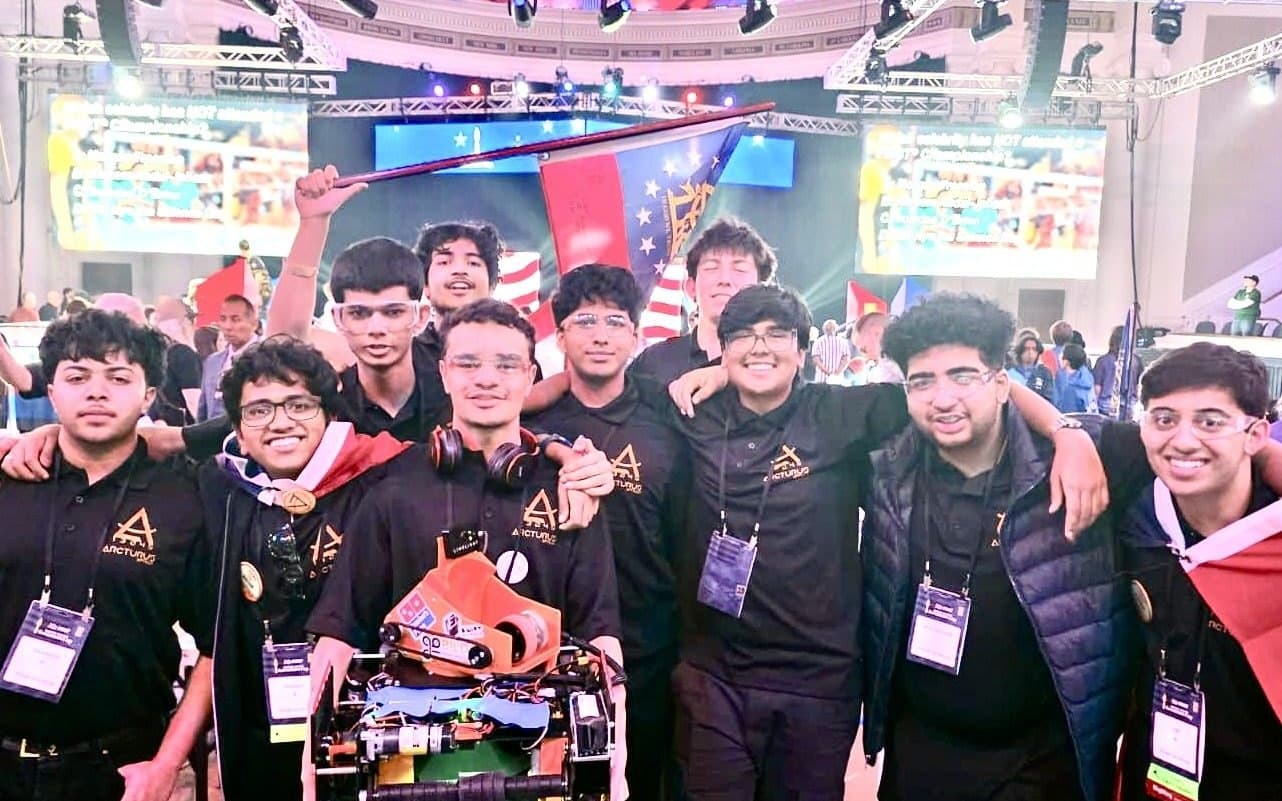
FIRST Tech Challenge DECODE-season robot for Team 13245 Arcturus–Apollo. I worked mostly on the intake — a gravity-driven variable intake that fits inside the 18-inch size limit — and ran the team's fundraising. We represented Georgia at the inaugural U.S. Governors Cup and placed 4th of 50.
The challenge
The 2025–26 DECODE game asked robots to collect balls, sort them into a specific order, and shoot them into high goals. Every robot had to start inside an 18 × 18 × 18-inch cube — and ours already used almost all of it.
My part: the intake
We brainstorm, CAD and build as a team, so I won't claim any single subsystem as mine alone. The intake is where I contributed most, along with prototyping.
The first intake's wheels didn't extend low enough to reach the balls. My first idea was bigger wheels, but even a small increase would have taken the robot over the size limit.
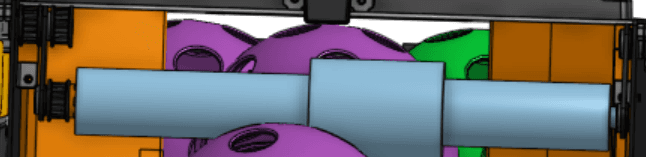
So I came up with a variable intake instead. The roller sits on its own axis, connected by a belt to a pulley on the robot, so it keeps spinning while it swings. Gravity holds it down until it touches the ball; as the ball squeezes into the robot, the roller lifts to let it through. The roller also has a section of larger-radius wheels.
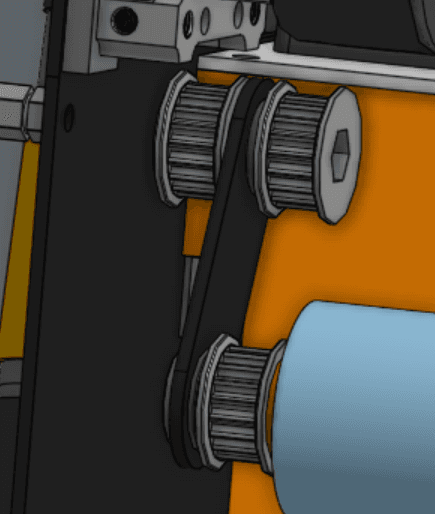
The real thing: belt, pulleys and the pivoting arm
The roller and its larger-radius section
Working on the intake
When it broke
The brackets that let the intake pivot had to be thin to fit, and with a tight schedule we 3D-printed them — so they were fragile. During a tournament both of them snapped, with only two matches left in the day.
I looked around our storage area, saw a plastic tray and thought: that would be perfect. I cut a rough replacement with a box cutter and handed it to our maintenance team to mount. We tested it with me feeding balls into the robot, and the intake worked just as well as before it broke — fixed with material that was never meant for robotics.
Off the field
A competition robot is also a budget. In the year I was business director, Apollo and our sister team Artemis raised more than $15,000 together from 13 sponsors; this season we're at 15 sponsors so far. I led that process, but many teammates helped find and secure those connections.
Result
Season record of 11–7 and the Connect Award at the Northwest League Tournament (February 7, 2026). Selected as Georgia's team for the inaugural U.S. Governors Cup — organized by the i.am Angel Foundation and held February 20–21, 2026 at DAR Constitution Hall during the National Governors Association meeting — and finished 4th of 50 state teams.
The robot, intake side
At the field, mid-match
Robot 13245 and its crew
DAR Constitution Hall, Washington, D.C.